
Sumba Island: The Land of Marapu and the Blood-Drop Tradition of Pasola
by I Gusti Ngurah Jayanti
As a cultural researcher, I have spent many years conducting fieldwork across East Nusa Tenggara (NTT). I have explored nearly the entire province — from its four major islands, Flores, Timor, Alor, and Sumba, to the many smaller islands scattered around them. Yet of all the places I have visited, Sumba holds a particular appeal, one that has only deepened the more I have come to know it.
Its rich array of cultural artifacts, its intangible heritage, and its vast savanna landscapes have opened my eyes to a kind of beauty I have struggled to find elsewhere, including in Bali, where I was born. Sumba lies east of the Wallace Line, and its flora and fauna reflect this position, blending Asian and Australian elements in a way that is genuinely unique. Sweeping savannas and tropical forests define much of its landscape, and the island is also home to two conservation areas, Laiwangi-Wanggameti National Park and Manupeu Tanah Daru National Park, which shelter many endemic species. Among the fauna found only on Sumba are the citron-crested cockatoo, the Sumba hornbill, the Sumba green pigeon, the Sumba flycatcher, and the apricot-breasted sunbird. The island is equally rich in language: its people speak at least four major languages — Wewewa, Kambera, Kodi, and Loli — each with numerous regional dialects.
The Land of Marapu
Sumba is also known as the Land of Marapu, a place shaped by megalithic traditions and by cultural practices centred on the veneration of ancestral spirits and the natural world. The island can feel deeply mystical, and much of that impression stems from its ancestral belief system, known as Marapu. In a sense, Sumba's very name carries this symbolism — an island of spirits. It is also nicknamed Pulau Cendana, or Sandalwood Island, for the sandalwood it once produced in abundance, and it has long been known for breeding sturdy horses, the result of crossbreeding local stock with Australian horses beginning around the 18th century.

Headmen from Sumba with a Dutch civil servant. COLLECTIE TROPENMUSEUM
A History Shaped by Outside Contact
Sumba society today cannot be understood apart from its past. The island was shaped by complex relationships with outside groups. According to its origin history, part of the population descended from migrants who arrived and settled on the island, some of them from Malacca, once famous as a major trading port. These migrants came in search of commodities, and Sumba, as a producer of sandalwood, was a natural destination. A related strand of oral tradition speaks of the ancestors of the Sumbanese descending from the sky to a place called Malaka Tana Bara, a name that itself evokes the Malacca Peninsula.
Within the wider history of Nusantara, Sumba was for a time part of the domain of the Majapahit Kingdom, a powerful Hindu-Buddhist maritime empire based in eastern Java that lasted from 1293 to 1527. Even so, Sumba retained considerable autonomy in its system of governance. The influence of Majapahit's Shaivite Hindu traditions remained strong, and it can still be traced in Sumba's customs and cultural symbols today — in its system of social stratification, its traditional house architecture, its woven textiles and their motifs, and its belief system.
Sumbanese society in the past was organised into distinct social layers: the Rato and Maramba at the top, the Kabihu Ata, or commoners, below them, and the Ata, who served as servants or slaves, at the base. The Rato served as ceremonial leader and held the highest standing in the traditional community. The Maramba formed the nobility, the regional rulers responsible for governance. The Kabihu Ata were commoners able to support themselves. The Ata, by contrast, were dependent on those above them in the social order, serving as servants or slaves. Within this broad structure existed further, more intricate sub-layers.
Majapahit's influence is also visible in the tri loka concept underlying the architecture of Sumba's traditional houses: the upper section is reserved as a sacred space for ancestors, the middle section serves as the living area, and the lower section houses livestock. This same influence appears in the motifs of Sumba's ikat weaving, which incorporate many elements of Hindu culture, and in Marapu belief itself, which absorbed aspects of Majapahit tradition — most notably in agricultural rites centred on honouring Marapu and seeking fertility for the land
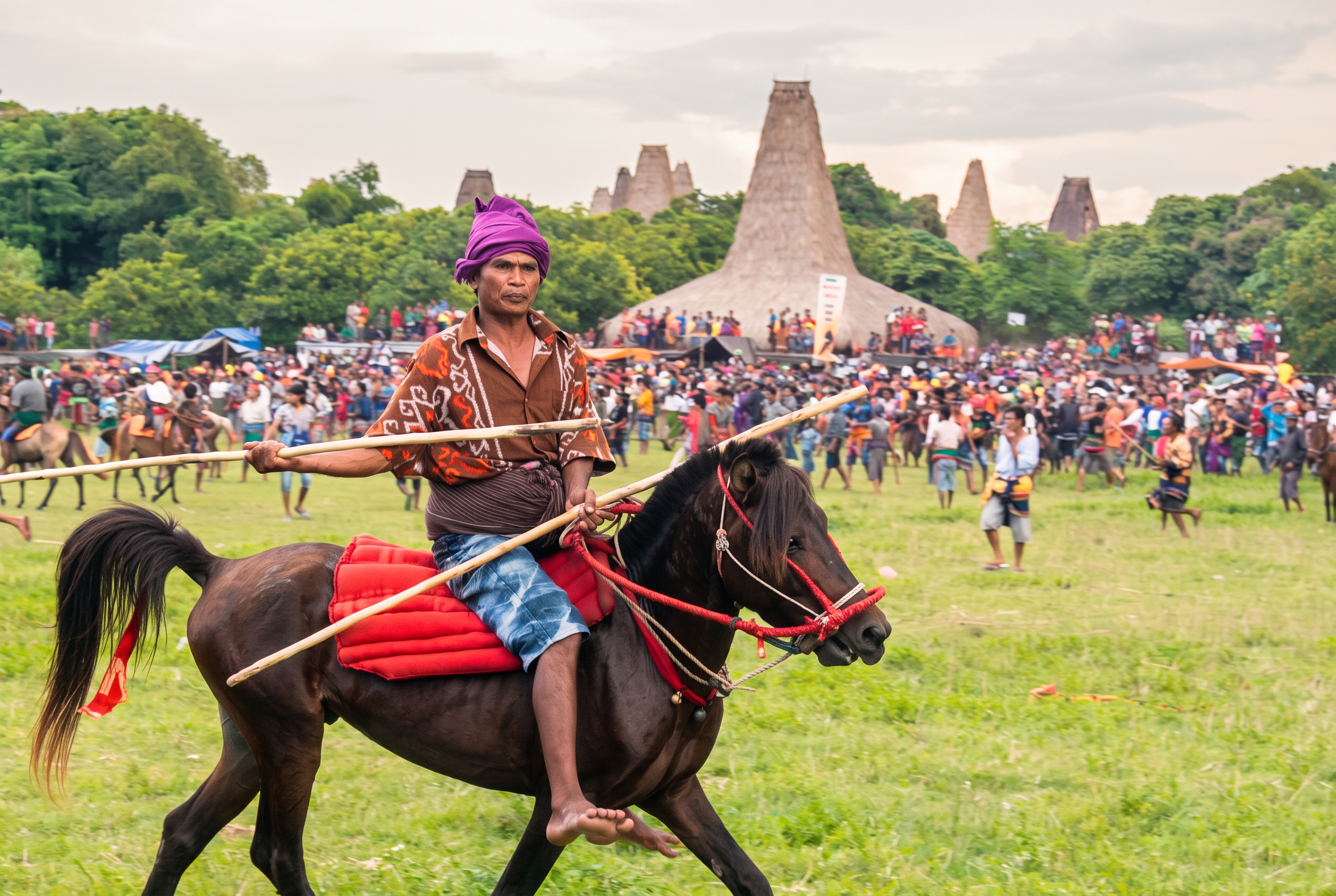
Image supplied by the author
Pasola: Fertility, Not Warfare
Have you ever heard of the fertility tradition involving blood drawn during Pasola? Despite appearances, this is not a tradition of violence but one of fertility — a request to Marapu to bring rain. Similar traditions involving blood exist elsewhere in the region: Gebug Ende in Bali, Presean in Lombok, and the Penti tradition within the Caci dance of Manggarai, Flores. I first approached Pasola as any traveller might, curious about the spectacle of the mock battle. But as I drew closer and spent time with local communities, I came to understand that the "war" staged in the Pasola arena is in fact the culmination of a much deeper celebration. That realisation, as an ethnographer, only sharpened my curiosity.
Visitors often see Pasola simply as a spectacle, a form of entertainment. For the Sumbanese, however, it is far more than a cultural performance — it represents a profound connection to nature and to ancestral spirits, and its celebration. It was this distinction that drove me to look more closely into the tradition.
Pasola is held once a year, at the start of the planting season, in February and March. The word Pasola — or Pholong, in the Kodi dialect — means "riding a horse cheerfully while throwing spears at each other." In essence, it is a game of throwing spears, known as hola, from horseback. Though it resembles warfare, it is not war in any literal sense.
The event begins with the Nyale ritual, performed at the full moon and marked by the appearance of sea worms emerging from crevices in the rocks along the shore. In Kodi District, Southwest Sumba Regency, Pasola is held at five locations: Homba Kalayo, Bondo Kawango, Rara Winyo, Waiha, and Wainyapu.
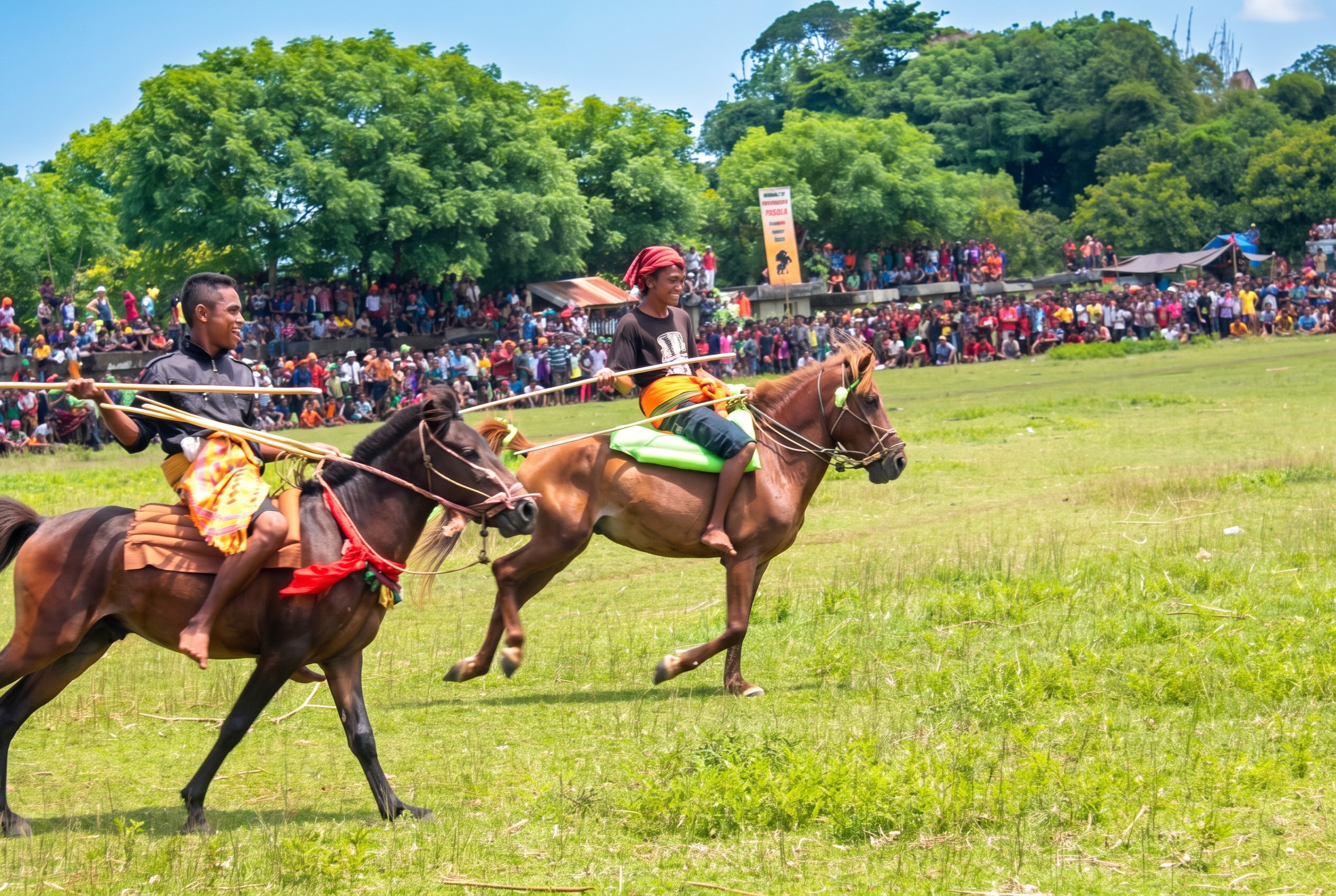
Image supplied by the author
The game itself opens with the arrival of the Rato Nyale, the sacred traditional priest, who enters the arena on a nyale — a revered local Sandalwood pony — and circles the field four times. Once the Rato has entered, two rival groups take to the arena, circling one another while brandishing spears made of coffee wood. They then face off, and the spear-throwing begins in earnest, with spears flying through the air in search of their targets. It is not uncommon for participants to be struck and fall.
Accidents do occur during Pasola, affecting both riders and horses. The event carries real tension, coloured by the rivalry between the two sides. It typically begins with small groups of around 25 to 50 participants each, but as the day progresses, the rivalry intensifies and more participants join the arena.
The contest grows more thrilling as certain riders distinguish themselves — racing at high speed, dodging incoming spears with agility, and throwing with precision. If a participant or horse is injured, they are taken immediately to the traditional village, where the Rato Merapu treats them with holy water.
Blood drawn in the Pasola arena is regarded as a form of sacrifice, believed to bring fertility to the soil. The event concludes when the Rato Nyale's horse re-enters the arena, circling it four more times to reconcile the participants and signal that Pasola has come to an end.
As a cultural spectacle, Pasola offers genuine entertainment. But its greater significance lies in how it sustains cultural heritage, strengthens communal identity, and continues to draw visitors to Sumba Island.
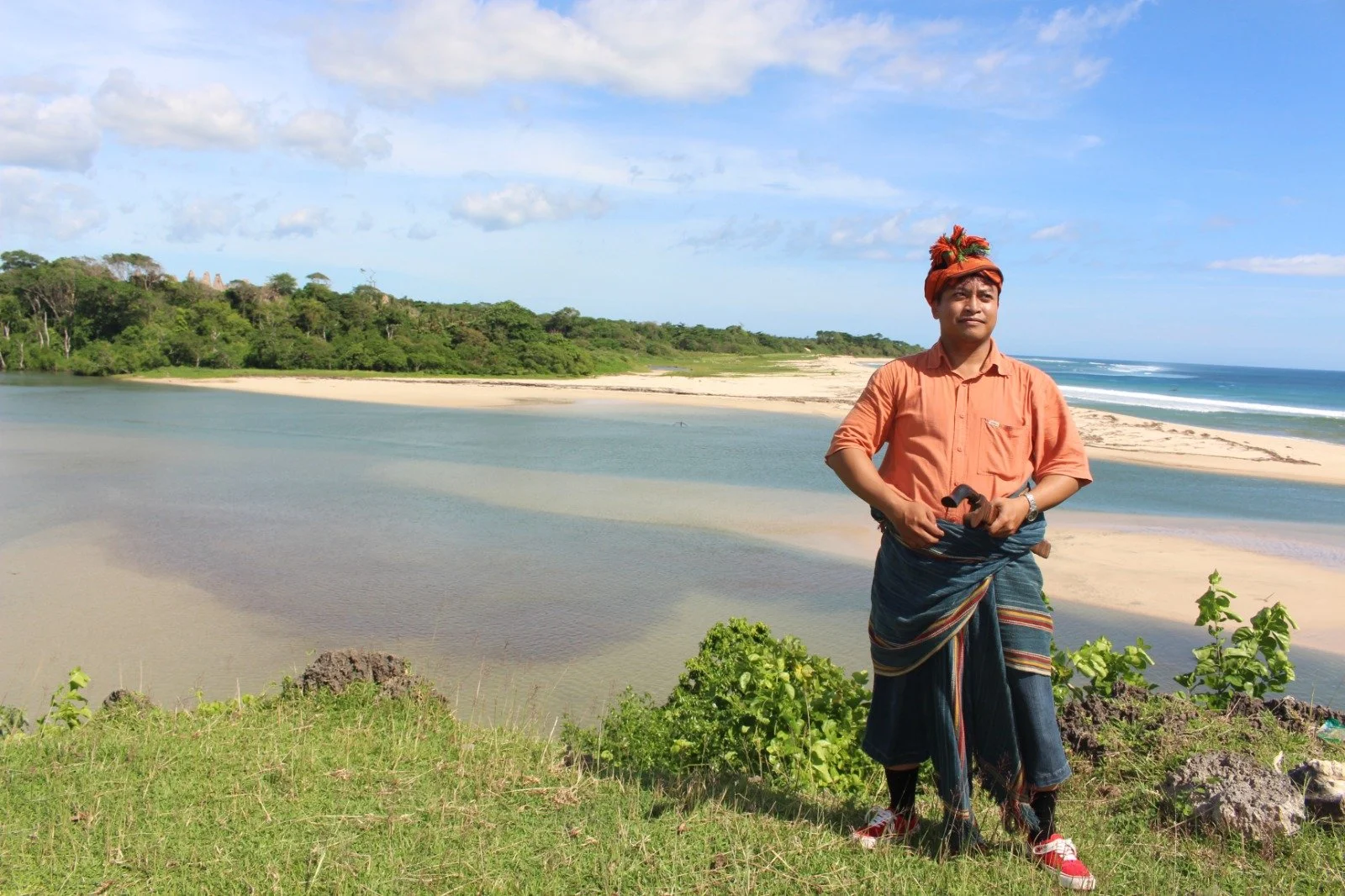
I Gusti Ngurah Jayanti, Researcher at Peneliti di Badan Riset dan Inovasi Nasional (BRIN), National Research and Innovation Agency https://www.brin.go.id/en
Pasola is not a spectacle staged for onlookers. It happens on its own terms, on dates set by the priests who read the sea worms, in villages that welcome very few outside eyes. Our March 2027 tour to West Sumba is run in collaboration with the Manamu storytelling centre and local Sumbanese elders, built on relationships that make this kind of access possible in the first place.
We take a maximum of eight guests, and the nature of this trip means spaces are genuinely limited, not marketed as such. If you would like to be among the first to know when booking opens, or to register your interest in our 2027 Pasola tour (9-19 March) directly, join our mailing list. We send word before anyone else hears it.
Additional dates for Sumba 2027 are: 16-26 May, 15-25 August and 15-27 October.
